Contents
- About 34% of consumers use social media specifically to learn about or discover new products, services, or brands.
- 78% of shoppers research social media before making a purchase.
- 90% of small businesses use social media as part of their marketing strategy, and 78% rely on their socials to drive revenue.
However, knowing what to post on your massage business’s social media pages isn’t always intuitive. What types of content will get you in front of your target audience? What posts will inspire them to schedule an appointment with you?
The good news about social media is that you can always evolve and adjust your strategy. No matter what your social pages look like now, you can revamp them and create more targeted posts for the future. If you’re not sure how to handle your massage therapy social posts, this guide is for you. By the end of this article, you should feel inspired to start or rework a social strategy that gets your business in front of your target audience.

Why is social media important for massage therapists?
As a small business owner, you likely already have a working marketing strategy in place. Why add more work to your plate by expanding that strategy with social media?
The statistics above show that social media is becoming increasingly important for all types of businesses. To break it down a bit, social media allows massage practices to:
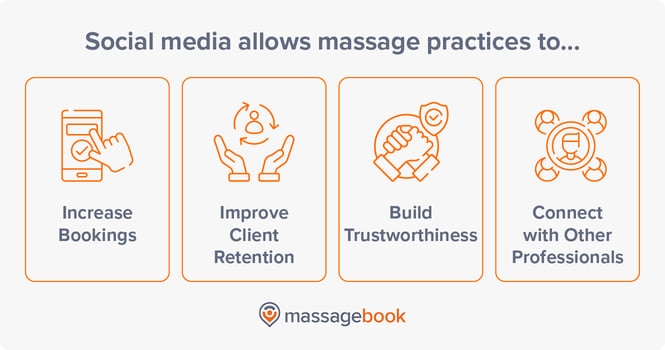
- Increase bookings: Over five billion people worldwide use social media, and many leverage it to find new products or services. In fact, 58% of consumers report that they have discovered new businesses through social media, meaning these platforms are one of the best ways to expand your massage practice’s reach and connect with new potential clients.
- Improve client retention: Existing clients who are satisfied with your service may follow your social media pages, making them more likely to see your posts. Increasing touchpoints in this manner keeps your business top of mind and reminds your audience to schedule their next appointment.
- Build trustworthiness: You can reinforce that your massage practice is reputable by showcasing your expertise and credentials. Do that by posting content that educates your community on massage techniques, provides a behind-the-scenes look at the day-to-day of being a massage therapist, or shows how you keep your space comfortable for clients.
- Connect with other professionals: Social media enables you to connect with like-minded wellness professionals. You can learn business tips, new techniques, and even work together on events and promotions to drum up new business. You can even create relationships with large businesses that may be in need of your services!
Having a robust social media presence comes with numerous benefits, making it extremely worthwhile to create well-designed massage therapy social media posts. And, it doesn’t have to take a long time! For example, you can reuse marketing materials from other channels (such as your email newsletter or blog posts) to jumpstart your social strategy.
Which social media platforms should massage therapists use?
While there are countless social media platforms, massage therapists generally stick to these:
- Facebook: Facebook is the most popular social media platform, boasting over three billion monthly active users worldwide. It’s still used by many to find local businesses, and accepts text, image, and video posts.
- Instagram: Instagram is another extremely popular social media platform, recently surpassing three billion monthly active users. Its posts are mostly images, but you can also create short-form videos and post them as Instagram Reels. This platform is especially great if you feel passionate about creating aesthetically pleasing visuals.
- TikTok: This is the social media platform that originally put short-form videos on the map. It’s notable for its incredible organic reach, as TikTok’s algorithm can show your videos to thousands of people, even if you have zero followers.
- LinkedIn: If your goal is to connect with other wellness professionals, LinkedIn is the social media platform to use. The platform is specifically designed to facilitate networking, which means posts tend to take a more formal tone. You can also use it to form relationships with larger corporations and businesses, which may help you get hired for upcoming events.
- YouTube: YouTube specializes in long-form video content. It’s best for building up your authority and creating evergreen educational content, such as explanations of complex massage topics and techniques. If you plan to teach massage to other practitioners, this social media platform is worth cultivating.
Every social media platform has its benefits and drawbacks. Ultimately, the platforms you focus on should be based on your business’s goals and your audience’s preferences. For instance, if your most immediate goal is to acquire new customers, you may start with Facebook for its local visibility and TikTok for its organic reach.
If you want a sense of which social media platform is right for your massage practice, take the quiz below!
Common social media mistakes massage therapists make
Not everyone is a social media whiz. As a massage practitioner who may not be familiar with marketing, there’s always a chance that your social media choices could cost you customers and visibility.
Here are the most common social media mistakes you should be aware of:
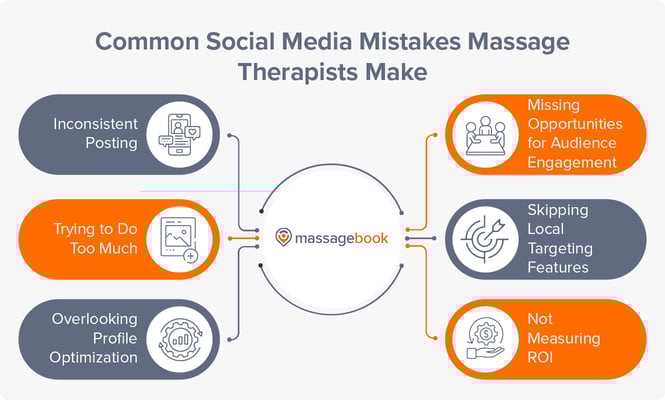
- Inconsistent posting: A social media profile that was updated months ago doesn’t inspire confidence in a viewer. They might think that your business isn’t operating anymore! Plus, social media algorithms favor active accounts, so posting inconsistently could cause platforms to show your content to fewer people.
- Trying to do too much: Social media is exciting and full of potential, which can lead massage therapists to try to create a ton of content for every platform. However, as a small business owner who handles many other business tasks, this can lead to burnout and low-quality content.
- Overlooking profile optimization: An optimized profile not only shows your massage practice’s professionalism, but it also gives visitors the information they need to learn more about your business. Add your practice’s address, hours, contact information, and even a link to your website to direct traffic to your booking page.
- Missing opportunities for audience engagement: A robust social strategy goes beyond creating engaging massage therapy social media posts. You also need to set aside time to engage with comments and direct messages from potential clients. Failing to respond quickly makes you look unresponsive and unprofessional, resulting in lost bookings.
- Skipping local targeting features: Since your massage practice is an in-person business, using local targeting features is essential to ensure your content shows up for people in your area. For instance, if you’re based in Houston, you likely don’t want Instagram to show your content strictly to users living in New York.
- Not measuring return on investment (ROI): While you may be excited to dive into using social media, you need a way to determine if what you’re doing is working and worth the effort. Measuring ROI helps you determine which platforms are generating the most bookings and driving the most revenue, which informs where you should allocate your time and effort.
The good news? You can solve most of these issues simply by creating a thorough social media strategy.
How to create a social media plan for your massage practice
Just as your massage practice needs a business plan, your social media strategy requires a plan that keeps all your posts focused and ensures they align with your goals. Here are the steps to creating a social media plan for your massage practice:
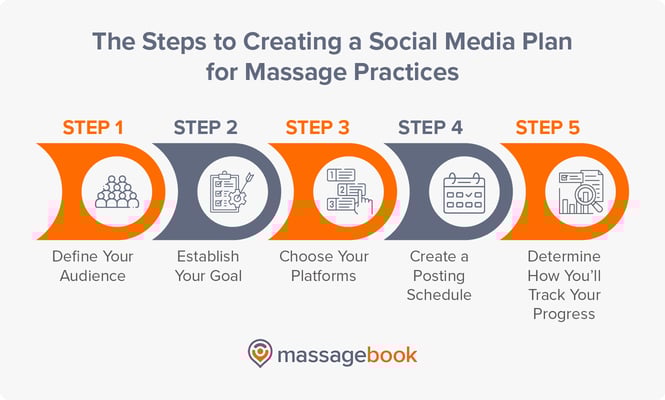
- Define your audience. You should have identified your target audiences when you created your business plan, but you may not have researched which social platforms these groups like to use. Use this time to conduct that research for a baseline of where to focus your efforts.
- Establish your goal. What is your most pressing priority for your social media strategy? Most massage practices aim to increase bookings and expand their reach, but you may also want to boost your professional image or connect with other wellness professionals. Use the SMART framework to set these goals—make them specific, measurable, achievable, relevant, and time-bound.
- Choose your platforms. Based on your goals and audience, choose which social media platforms to focus on. For first-time social media marketers, we recommend starting small with one or two platforms. Depending on your results and how well you manage the associated work, you can adjust your plan in the future.
- Create a posting schedule. Don’t overload your schedule. Instead, start with just one or two posts per week on each social media platform you choose. Give yourself ample time to create these posts and engage your social media audience’s comments and messages.
- Determine how you’ll track your progress. Set a few metrics that you’ll track to determine your progress. For example, you might track the number of visitors or bookings your website receives through social media, the number of followers your social pages have, and the number of unique accounts that view your posts.
Then, commit to executing your plan for a set period before re-evaluating. We recommend testing for about three months before making any changes to give yourself time to build trust and help the social media platform’s algorithm learn more about your content. Plus, this amount of time helps even out any fluctuations you may experience, resulting in a more accurate picture.
This is also the time to determine if you need software to help you push your social strategy forward. For example, MassageBook offers social media integrations in its comprehensive massage therapy software, making it easier to turn page visitors into paying clients. With this feature, you can showcase your top services, add booking buttons directly to your social profiles, and monitor your performance in real-time. Plus, you’ll get access to other essential features, such as SOAP notes and memberships, which make running your massage practice a breeze.
 Top examples of massage therapy social media posts
Now that you have an idea of how to jumpstart your social media strategy, let’s take a look at a few top examples of massage therapy social media posts so you understand what makes an engaging post.
Example of a massage therapy social media post on Facebook
Social media posts featuring details about staff members help build trust with potential clients and promote the services you offer. This post by The Art of Touch Massage does that well by discussing Anita’s experience and adding a quote that characterizes her therapeutic approach. It also discusses the services Anita specializes in so that viewers know what types of massage to book with her.
Example of a massage therapy social media post on Instagram
Another great format for massage therapy social media posts is the promotional or discount post. This example from Muscle Masters is well-designed, visually appealing, and includes all the necessary details to understand the promotion, such as the price, duration, and type of massage. Language like “flash sale” and “limited time” also sparks a sense of urgency, which can lead to more bookings.
Example of a massage therapy social media post on TikTok
@makewellmassage Come to work with me today! ✨💆🏼♀️#massage #massagetherapy #therapy #ditl#vlog #lifestyle #jobs #work #fyp ♬ original sound - Bomb ass songs
What we love about this TikTok video is how it combines its understanding of the social media platform and shows the professionalism behind massage. “Come to work with me” is an extremely popular format on TikTok, and this creator leverages it to show how she takes care of her clients. Details like personal hygiene and sanitizing between clients reinforce that she’s a trustworthy massage therapist who takes her clients’ needs and comfort seriously—what better way to promote her services?
Example of a massage therapy social media post on LinkedIn
As we mentioned previously, LinkedIn is the social media platform for networking and connecting with other wellness professionals and businesses. In this massage therapy LinkedIn post, Jessica shares her thoughts as she nears the two-year anniversary of owning her massage practice. What we love about this post is how she also details key lessons she learned, such as the importance of saying no at times. People respond positively to her thoughts, commenting to congratulate her on her hard work and expressing excitement about the business’s future.
Example of a massage therapy social media post on YouTube
In the description of their YouTube channel, this massage therapist discusses how he practices massage and aspires to teach massage techniques and bodywork in the future. This video is a guided walkthrough of the techniques he uses to release pain in the neck, scalp, and temporomandibular joint areas. He reinforces his knowledge and authority by providing a detailed discussion of what he is doing and why while keeping the voiceover casual and fun, capturing the interest of massage therapists and potential clients alike.
Additional resources
Although creating visually appealing and engaging massage therapy social media posts may feel daunting or overwhelming, breaking the process down step by step makes it more manageable. Consider how you can leverage the tips and examples we’ve shared in this guide to your advantage and ensure that your massage practice brings in the bookings and revenue it needs.
If you’d like to learn more about marketing your massage practice, check out these additional resources:
- Massage Therapy Marketing: 15 Effective Ideas to Explore — Social media is just one part of an effective massage marketing strategy. Discover other ideas to expand your reach.
- 15 Well-Designed Massage Therapist Websites to Inspire Yours — Your massage practice’s website is the cornerstone of your marketing efforts. Explore examples of well-designed websites for inspiration.
- Massage Membership Ideas: Creating A Model To Boost Bookings — Increase bookings with a reliable massage membership model. Learn about tips and membership ideas in this guide.